Pick up. Press a key. Someone you chose answers. A real phone with keys and a handset, for the people you choose: open source down to the circuit board.
There was a time when calling someone meant a landline or a payphone. Then phones moved into our
pockets and the landline faded: who wants to pay for one more phone to check?
Something went with it. A phone that lives in one place. Calling a home, not a pocket. Knowing
that whoever picks up is there because they want to talk, not because a buzz interrupted them.
Open Lounge Phone brings that back on purpose: real keys, a handset that stays put, and it rings
only for the people you’ve said yes to, answered at your leisure.
Your calls, on your terms. We live in an age where you can run your own communications. It
works over any internet connection: your own server, a friend’s, or the free public hub, all
talking to each other as equals. It even runs with no internet at all, on a server inside your
home, school or building, so calls never leave the premises (run it
offline). Nobody owns the network but the people on it.
It calls, and is called by, only the people you approve. It has no number and no address,
so nobody can find it. Quiet hours send callers to voicemail, it never records your child,
and you see every call it made or missed.
Friends on the line
Kids call grandma, and their friends once both families’ grown-ups say yes, even when the
other family is on a different server. One key per person, names on the screen.
Theirs to hack when they're ready
Swap the keycaps, print a new case, read the firmware, change it. The rules live on your
server, not in the phone, so changed firmware still reaches only the people you approved
there.
Kids’ phones on the market are closed boxes with a fixed feature list. This one is a first phone
and a first electronics project in one, and it isn’t only for kids: what it can
be.
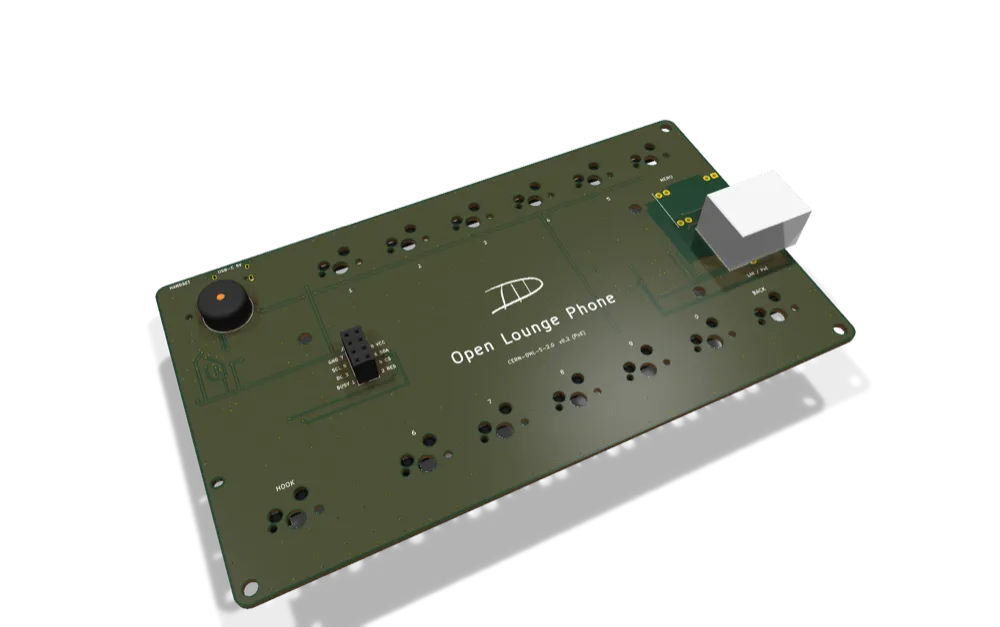
The same small open ESP32 board, in whatever body suits the room. Board v0.1 runs on Wi-Fi.
Board v0.2 adds Ethernet and PoE, so one network cable runs it (designed, not built yet).
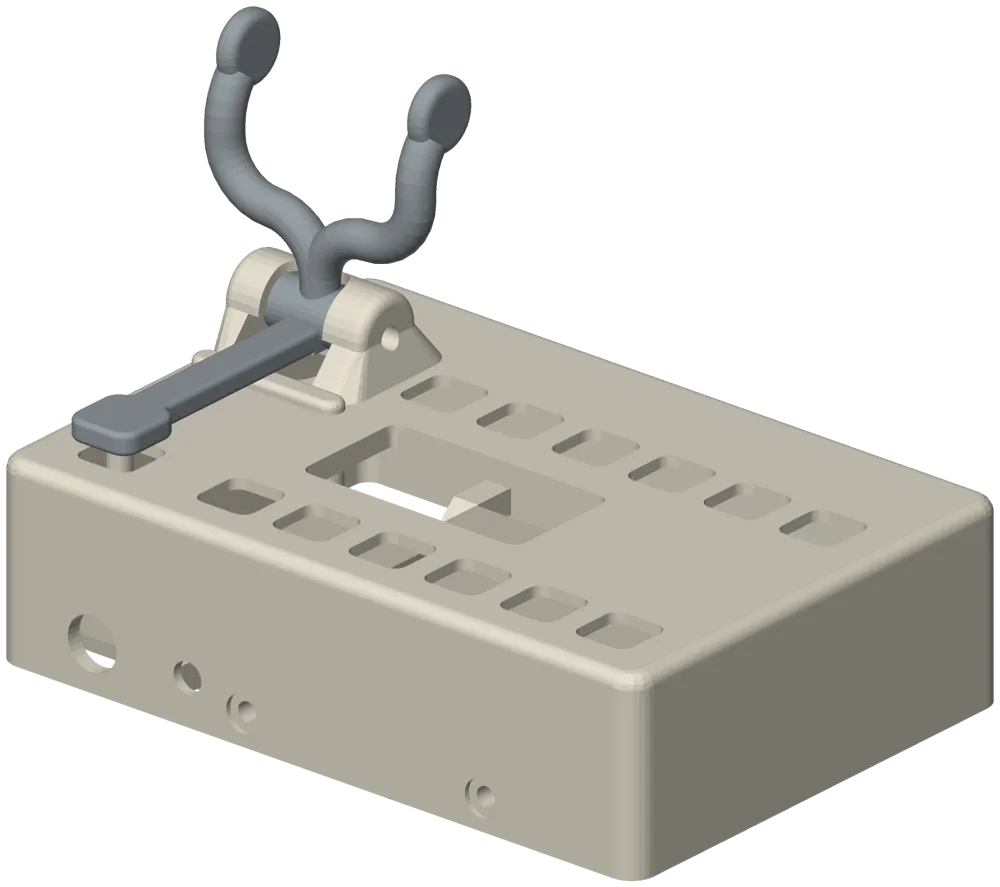
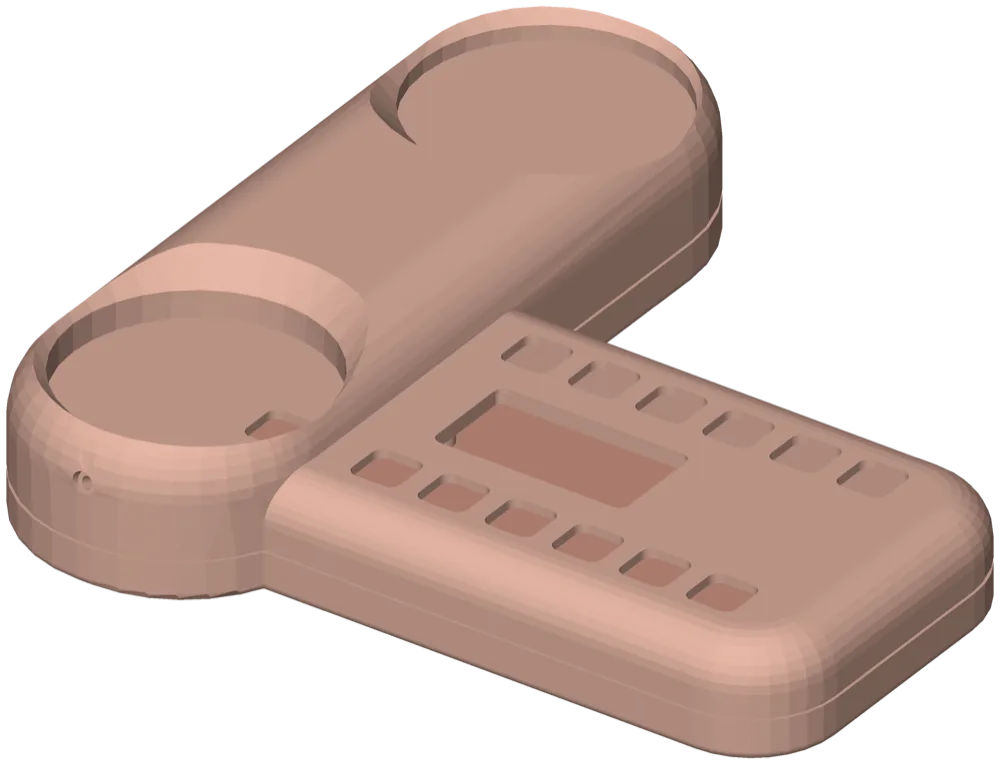
Desk box · 3D printedFlat-cut · one sheet of laser-cut acrylicWall phone · a real switchhookCushion · a bed for the handsetBoard v0.1 · Wi-Fi · built and workingBoard v0.2 · Ethernet + PoE · in design
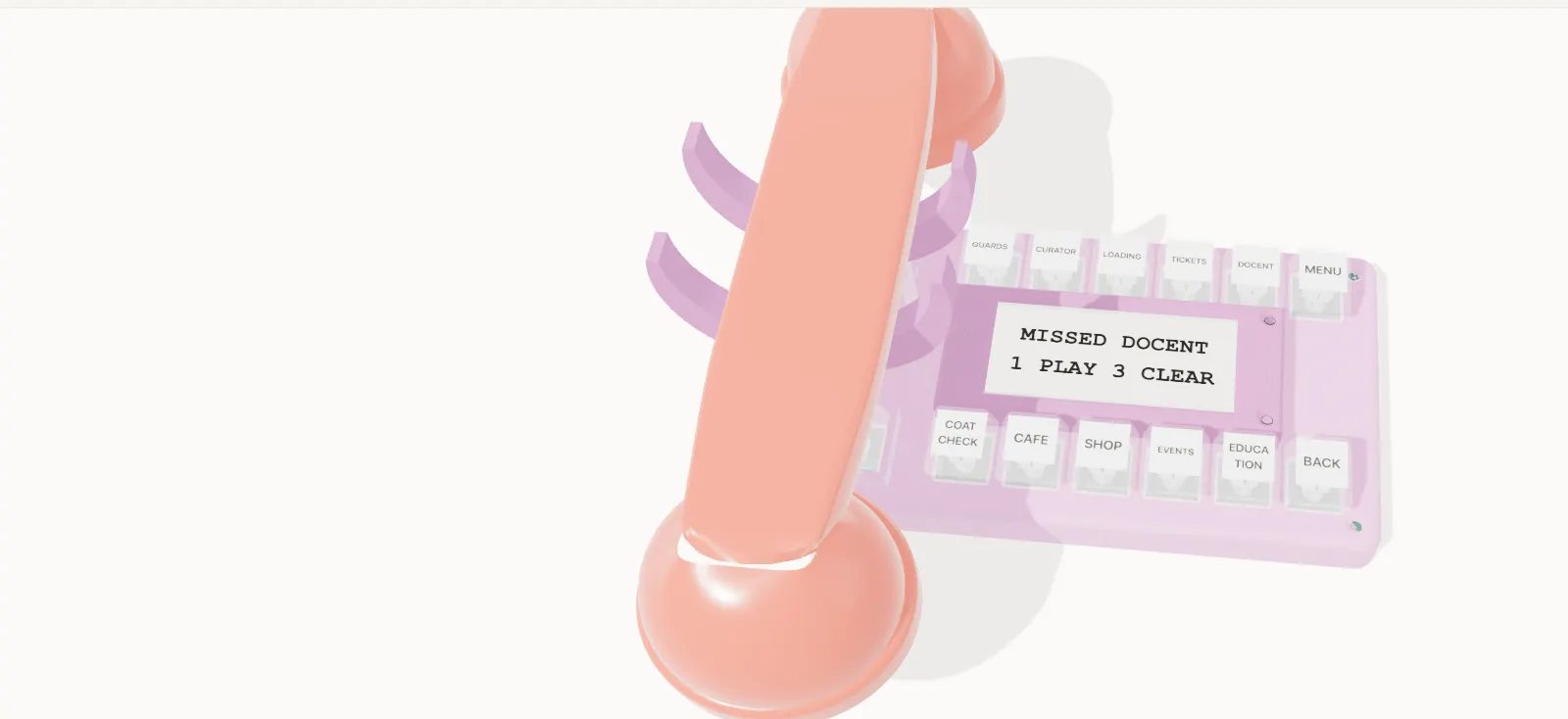
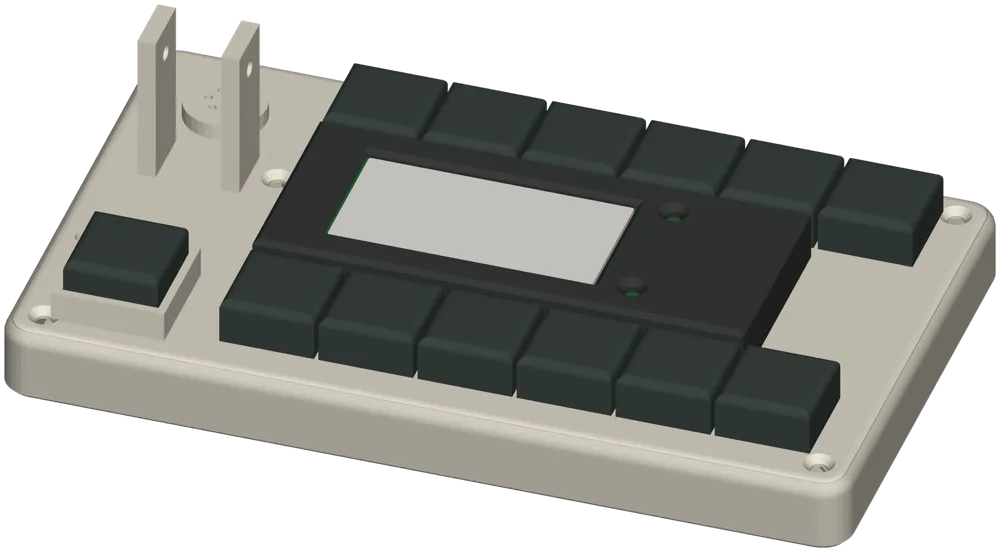
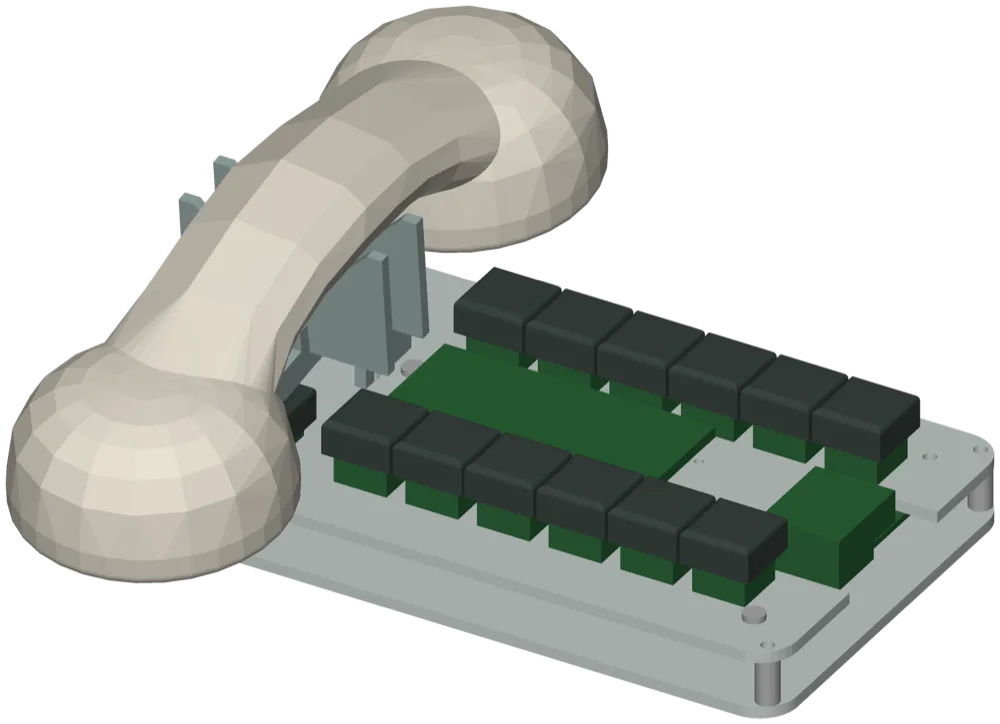
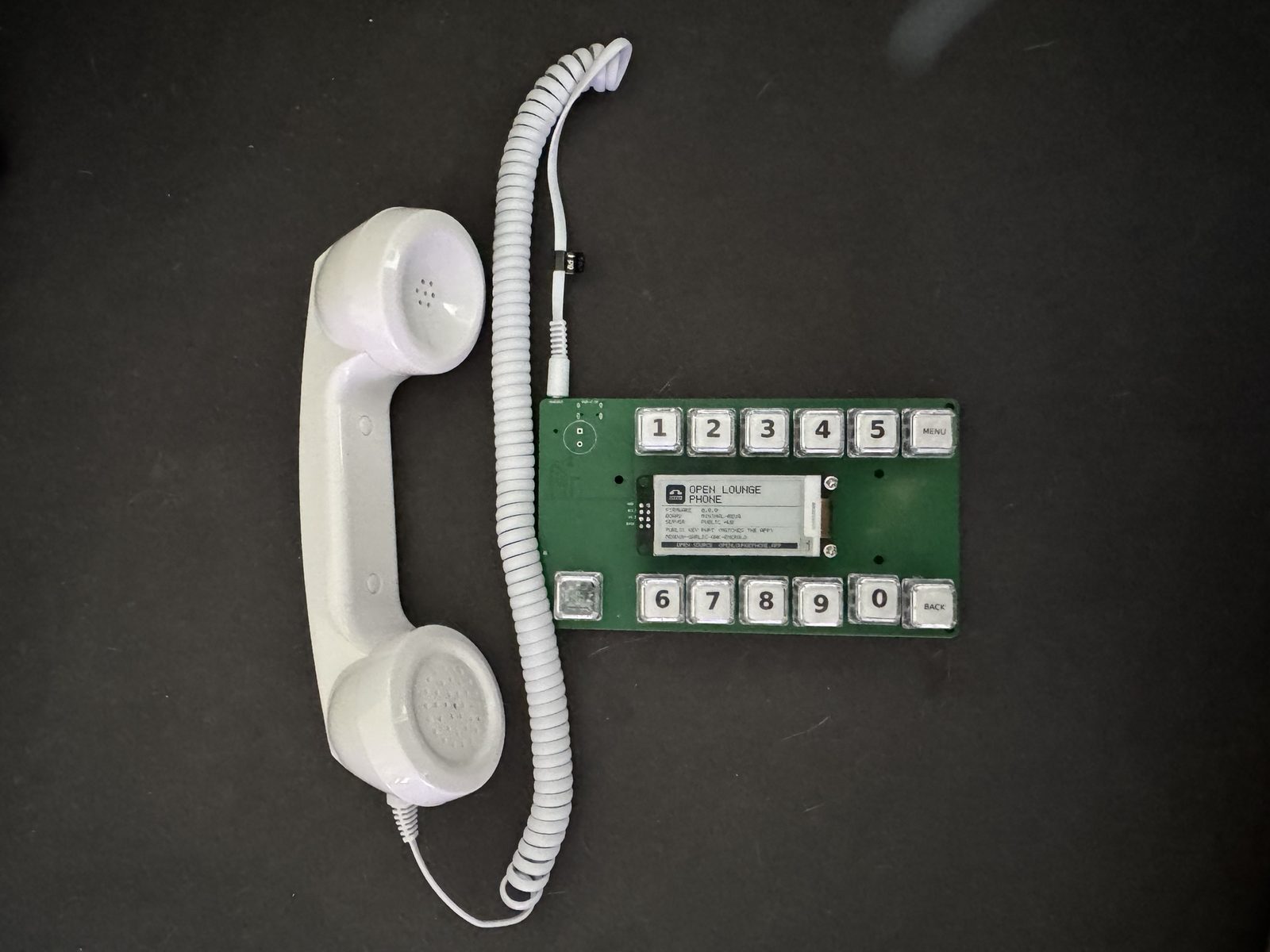
Twelve hot-swap mechanical keys, a small e-paper screen, a jack for any classic handset, a ringer
and one light. No microphone on the board: the only one is in the handset. Boards and
cases has the details, files and costs (about $23 in parts per
phone).
Everything runs on connections. Nobody reaches you until you’ve accepted their knock, and
there’s no phone number to spam and no bridge to the phone network, ever. You choose who can
reach you, when you’re taking calls, and whether your connections see that you’re around.
Calls go straight between the two people: the audio never passes through the server.
Voicemail everywhere, with a greeting and a transcript.
Rooms and party lines, 3-way calls, hold and transfer.
Lounge phones anyone takes over as themselves, and that forget them afterwards.
Passkeys, no passwords or email; your own address, name@server.
Any old phone or tablet can be the phone: open /device/ and add it to the home screen.
Your server or ours: your own Cloudflare account, a Node server with SQLite, or the free hub.
Software: AGPL-3.0-or-later. Hardware: CERN-OHL-S-2.0. No accounts with us, no tracking, no ads.
Social media is dead, but being social isn’t. The hub gives you an address your friends and
family can reach you on, with you deciding who gets through and when. You don’t need the
hardware: the phone runs in any browser too.
The hub is free and funded by donations. Most calls go straight between the two people, so it
costs little to run. Sign up at hub.openloungephone.app.
$0 of the $150 monthly goal for October 2026
$150 a month keeps the hub running for ~7,250 people.